

The advantages of metal ceilings

Metal is considered the solution for covering acoustic ceilings in non-residential buildings mainly: offices, hospitals, shopping centers and airports. The acoustic metal ceiling offers several advantages, whether it is resistance, accessibility or comfort.
The advantages of acoustic metal ceilings
Acoustic comfort and sound insulation
Plafometal metal ceiling systems offer excellent acoustic performance. Both in absorption and sound insulation. Acoustic comfort is thus ensured. More information is available in the Benefits and Performances section.
Proven strength and quality
The strength of the metal ceiling is primarily due to the manufacturing process. The latter provides a certain mechanical rigidity to the structure. During the installation and maintenance phases, the metal ceiling appears to be the most resistant solution on the suspended ceiling market.
Adapted accessibility
It is often necessary to access the plenum. There are therefore different solutions for accessing this area without difficulty.
Depending on the frequency of access and the configuration of the plenums, we offer various formats of metal ceiling.
In particular, we offer removable, lifting, opening, sliding, pivoting trays, with or without floor mounting.Protection against fire
The reaction to fire is an intrinsic characteristic of a material but it is also possible to add fire detectors and sprinklers with perfect integration.
Less nuisance on construction sites
The implementation of custom-made products transfers part of the work from the construction site to the factory. Example: finishing products, cut-to-size by integrating equipment (lighting, ventilation, audio, etc.). Construction sites are therefore quieter, cleaner, reduced dust and waste. An asset particularly in urban areas.
Plafometal has been able to take advantage of the natural anti-noise qualities of metal while improving them, to make the acoustic metal ceiling an architectural element with ultra-high-performance insulating qualities.
Total freedom of creation
In order to create your own architectural project, we offer you solutions that meet your creativity. Our wide range includes:
- customizable shapes,
- flexible dimensions
- various colors and perforations to create a unique project.
Your imagination is the only limit to your creativity!
Specialist in the design of acoustic metal ceilings, Plafometal offers a range of products to meet all design projects, including the most creative.
Office, hospital, train station, shopping center... each project is unique. Whether it is a custom or standard solution, the design office will be present at your side throughout the project to support you in your technical choices of acoustic suspended ceiling.
Why is a metal acoustic ceiling effective?
In order to provide acoustic qualities to the metal, it is necessary to perforate the metal ceiling to allow sound waves to circulate.
Common sense would suggest that the more perforations there are, and with a large diameter, the better the sound absorption will be. However, this is not the case. Indeed, the perforation rate has little influence on absorption. The choice of making more or fewer perforations then becomes essentially aesthetic.
The ceiling, an optimal surface: The ceiling represents the generally largest free surface in a room and the best suited to acoustic treatment. It participates first and foremost in the treatment of sound reverberation.
We therefore understand better why its capacity for acoustic absorption is essential when looking for acoustic comfort. A good acoustic environment has the effect of making a place more comfortable but also more conducive to serenity, work and healing.
Acoustic comfort and sound insulation
The use of an acoustic metal ceiling improves acoustic comfort inside a room or premises. It also participates in the treatment of sound insulation between adjacent rooms.
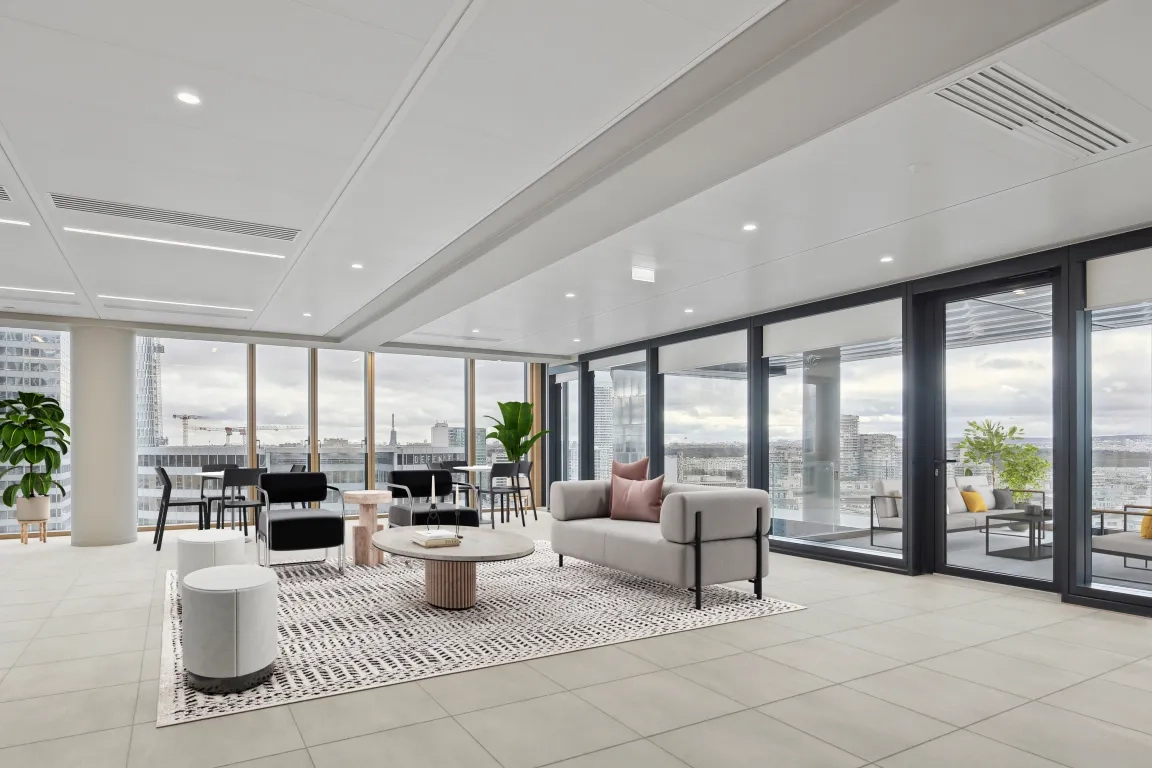
Sound absorption
The sound absorption of a suspended ceiling corresponds to its capacity to reduce reflected energy in order to contribute to the reduction of the reverberation time of sound waves inside a room.
Sound absorption indices
The absorbing power of a ceiling is evaluated by:
- The Sabine coefficient α calculated by frequency bands according to EN ISO 354.
- The weighted absorption coefficient αw according to EN ISO 11654. This is a single value that simplifies the comparison of absorption performances from one solution to another.
These coefficients are between 0 (no absorption) and 1 (total absorption).

PLAFOMETAL sound-absorbing metal ceilings
Plafometal has developed a complete offer concerning the metal ceiling to meet all acoustic needs.
- For greater intelligibility, the ALPHA offer ensures absorption up to 0.85 (class B): ideal in passageways.
- For optimal acoustic comfort, the ALPHA PLUS offer guarantees absorption up to 1 (class A)
These ALPHA and ALPHA PLUS offers ensure maximum serenity in offices, classrooms, hospitals, etc.
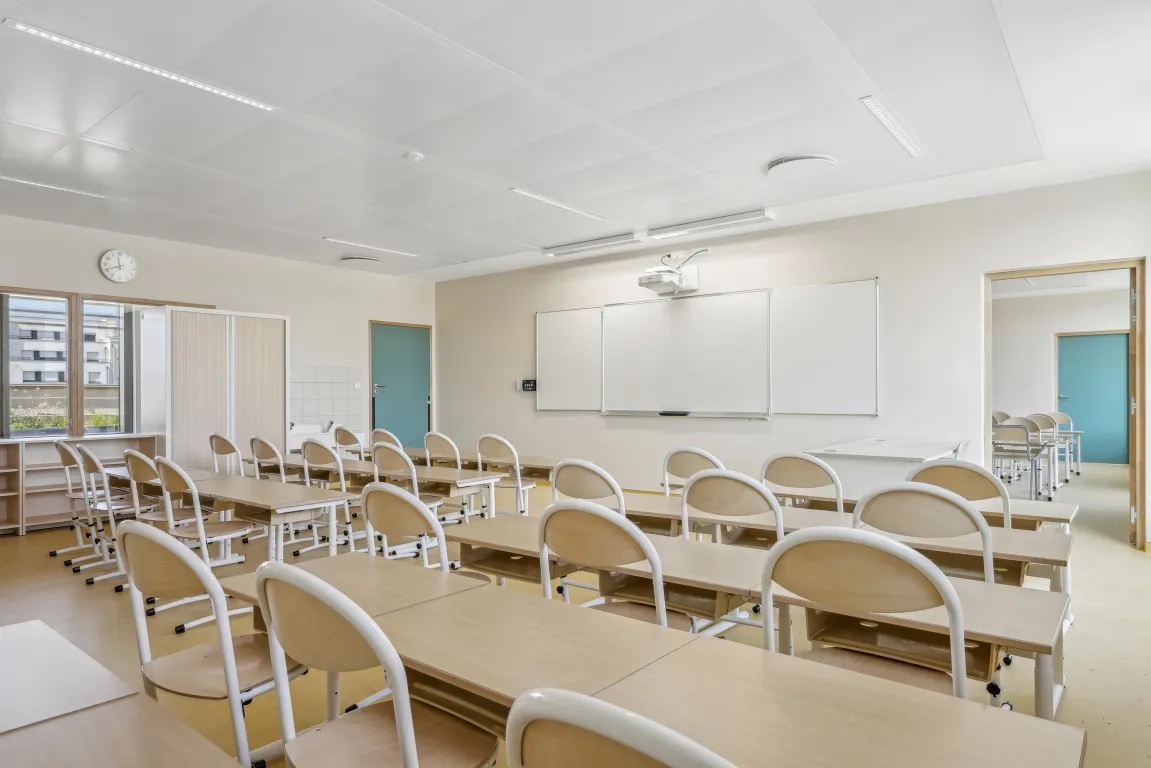
Equivalent acoustic absorption area (Aeq)
-
The Aeq (m² sabin) indicates the ability of an acoustic element (island, baffle) to absorb sound. It corresponds to the hypothetical surface of a perfectly absorbing material (α = 1) that would provide the same performance. Unlike a continuous ceiling, which only absorbs sound on its visible face, these open solutions capture sound on all faces and sides, increasing their effectiveness. Measured in a laboratory according to EN ISO 354, the Aeq allows objective evaluation of performance.
PLAFOMETAL islands and baffles provide an equivalent acoustic absorption area that ensures significant reverberation reduction and improved acoustic comfort.
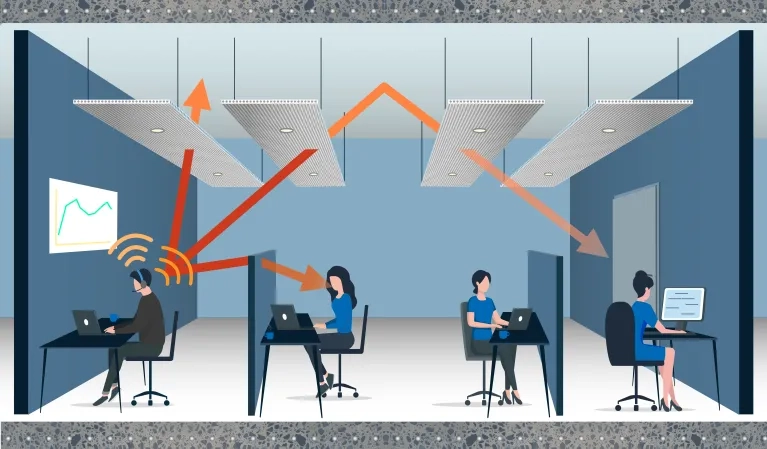

Lateral attenuation
Lateral attenuation represents the ability of the suspended ceiling to reduce sound transmission between adjacent rooms sharing the same plenum (this is a common construction method in tertiary sector buildings).
-
Lateral attenuation indices:
The lateral attenuation performance of a ceiling is measured in the laboratory according to EN ISO 10848-2. It is expressed by the standardized lateral sound insulation index Dn,f,w expressed in dB
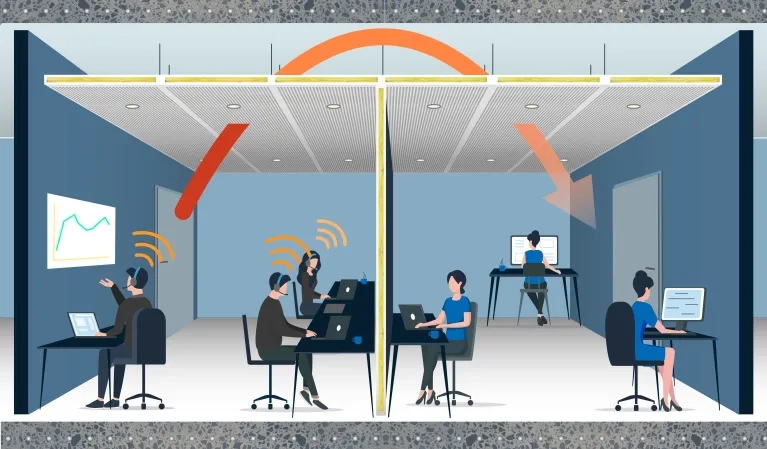

PLAFOMETAL soundproofing metal ceilings
The absorption solutions of our metal ceilings combined with the closing cover of the metal tray on the plenum side (plasterboard or steel sheet type) make it possible to provide our metal ceilings with high lateral attenuation performance.
For optimal confidentiality between premises, the DECIBEL offer guarantees lateral attenuation Dnfw up to 52 dB.
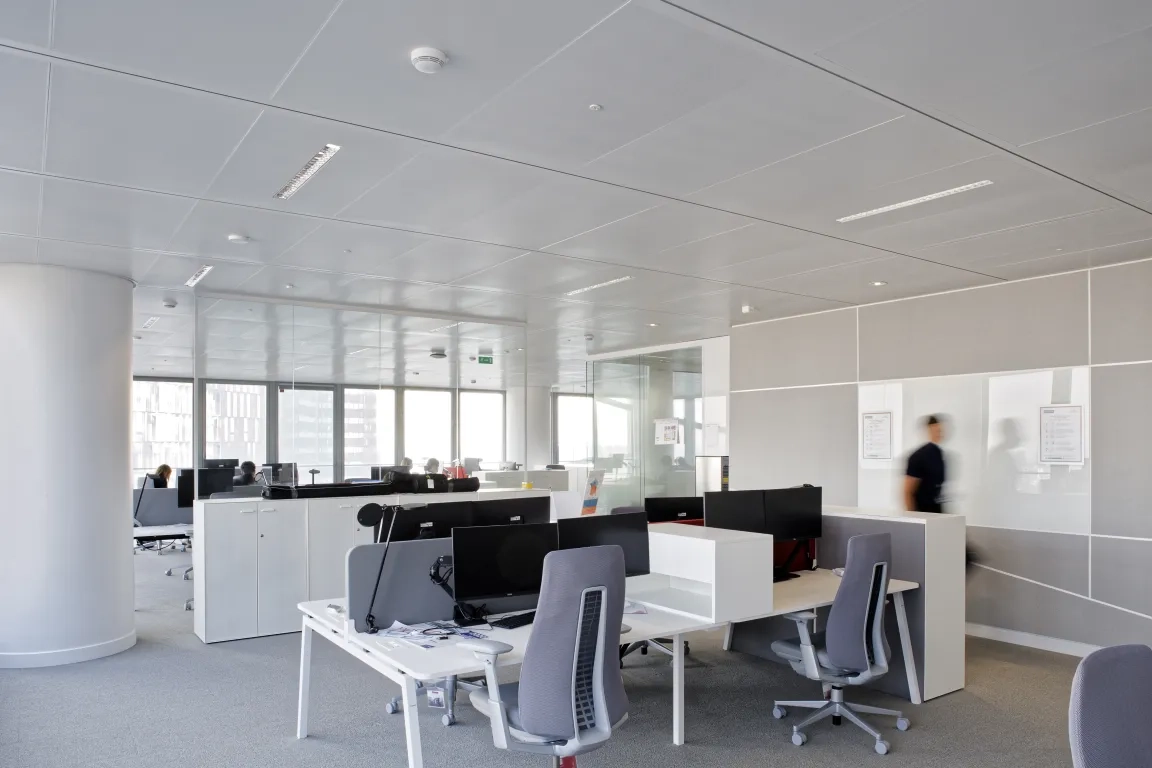
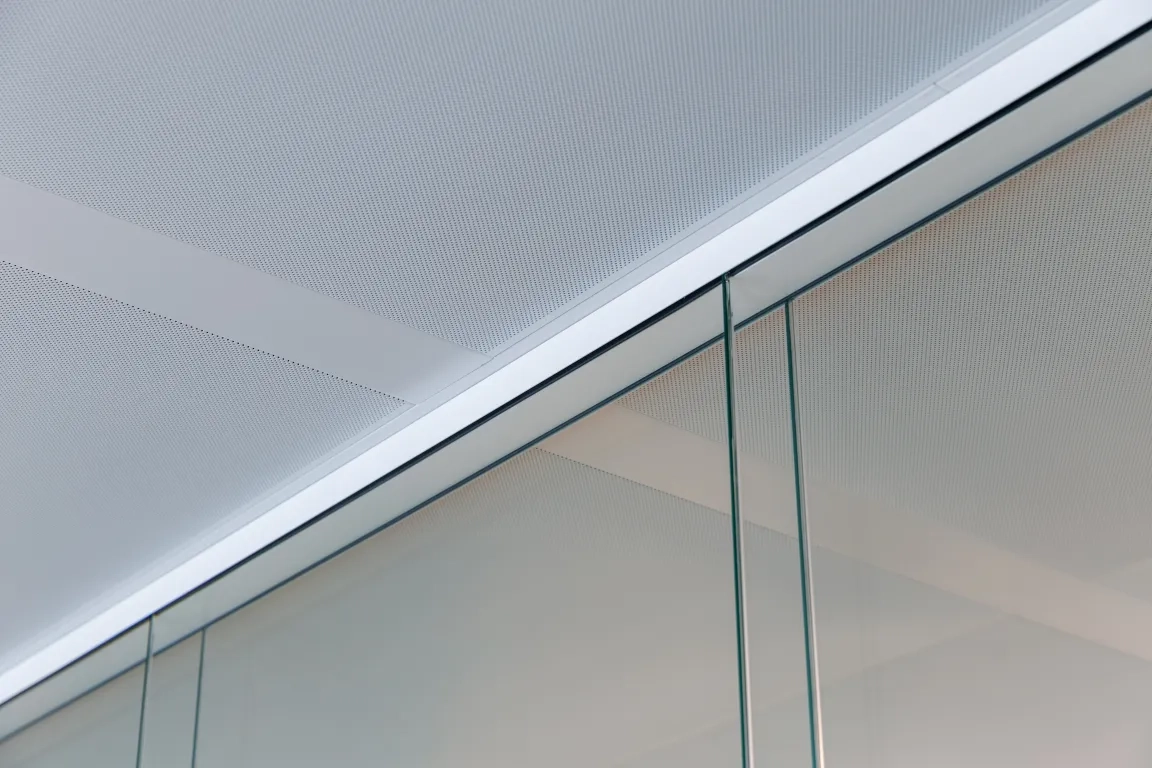
Find all of this information in the dedicated brochure “Acoustic metal ceilings”


Fire protection
French fire safety regulations in buildings describe preventive measures aimed at protecting people. They facilitate and secure emergency response and protect material assets.
Fire prevention obligations are classified into two categories:
- Active means of protection including detectors and sprinkler-type water diffusers.
- Passive means of protection including the reaction to fire of construction materials and the fire resistance of construction elements.
Active protective measures
For perfect integration of fire detectors and sprinklers, Plafométal makes factory reservations in most ceilings.
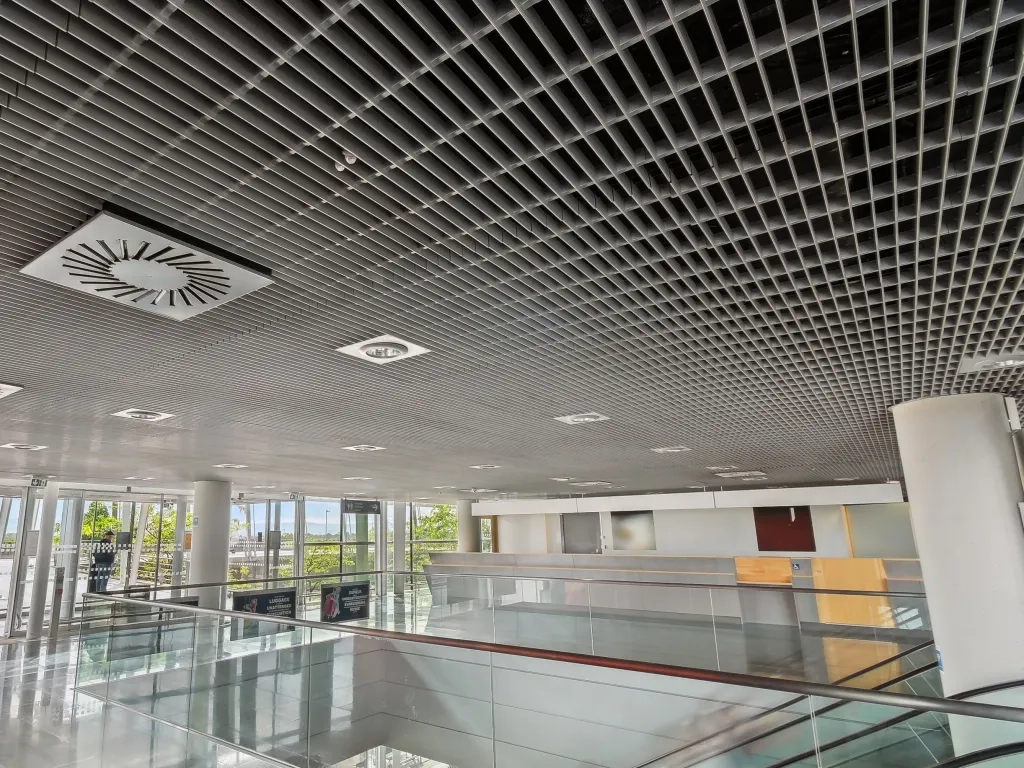
In the case of an openwork suspended ceiling, the standard relating to fixed fire-fighting installations requires a total open surface of at least 70% of the flat surface of the ceiling to be respected.
It is commonly considered that the elements of a metal ceiling (excluding lighting and equipment) must offer at least 80% of empty space. Our Grid and Vertical Blade ceiling solutions make it possible to meet this standard, under mesh conditions.
Reaction to fire
Reaction to fire is an intrinsic characteristic of a material and characterizes its contribution to the development of a fire.
Plafometal metal ceiling solutions have the best fire classification performances:
- A1 for all unpainted and pre-painted products with or without veil
- A2-s1,d0 for post-painted or filled and reversible radiant products
The classification of the reaction to fire performances of suspended ceiling elements must be carried out according to various provisions, unified at European level. They are described in:
- The "Euroclasses" standard has been in place since the publication of the decree of November 21, 2002, relating to the reaction to fire of construction and development products.
- The EN 13964 product standard for suspended ceilings describing the requirements and test methods.
The regulatory texts that govern fire safety and mention M categories, according to the French reference, will gradually be updated to "Euroclasses".
Pending their updates, a transposition table, described in the decree of November 21, 2002, indicates the admissible performance levels based on the regulatory requirements requested in the current texts.

Fire stability
Fire stability characterizes the time during which construction elements can play their assigned role despite the action of a fire.
For France
Regulations for suspended ceilings in France:
The regulatory requirements for fire resistance classification of suspended ceilings; for establishments receiving the public (ERP); are different depending on whether or not they have a role in protecting structural elements of the building.
The use of a suspended ceiling as a protective screen for structures requires:
A test according to ENV 13381-1
A REI type classification, according to the provisions unified at European level.
A suspended ceiling that does not have a role in fire protection of structural elements must meet other requirements. In particular, it must meet the requirements of:
Mechanical stability to fire, i.e. no element falling. This requirement, requested in the common horizontal circulations (CHC) of high-rise buildings (IGH), requires a test as well as a classification of the fire stability type (SF).
We offer several solutions for metal ceilings with:
SF 1/4 h and SF 1/2 h fire stability performances and meeting the French fire regulations in force in the common horizontal circulations (CHC) of high-rise buildings (IGH), in a reception hall.
For all needs: Monobac SF (Clip in cassette), PM8 hooks, PM8 on corners (self-supporting tray) or ORIAL SF or ORIAL XL SF large format (tilting opening tray) in the circulations. The implementation must comply with the PV and extensions (available on request) and with §5.6 of DTU 58-1.
For Belgium
Suspended ceiling regulations in Belgium:
The regulatory requirements state that a suspended ceiling requires a fire stability of 1/2h. This condition is intended for suspended ceilings that must meet the requirements of mechanical stability to fire, required in evacuation routes, premises accessible to the public and collective kitchens.
We offer metal ceiling solutions with a fire stability SF 1/2h according to tests carried out at WarringtonFireGent. The implementation of our Fire Stable solutions must comply with the classification and test reports (available on request).

Light reflection
Thanks to their light reflection indices of up to 87% in the non-perforated version and up to 79% in their perforated versions, Plafometal metal ceilings reflect the daylight received and contribute to the provision of natural light.

Implementation and protection against corrosion
Interior implementation
- It must comply with DTU 58-1.
- For metal ceiling systems implemented on large surfaces and subject to large temperature variations, the thermal expansion of the materials must be anticipated: adequate expansion joints should be provided.
- For steel elements (whose expansion is quite close to concrete), consider approximately 1 mm per meter for 100 °C. For example: there is an expansion of 12.5 mm for a 25 m ceiling subjected to a temperature variation of 50 °C. The expansion of aluminum elements is twice as high as those made of steel.
- DTU 58.1 specifies that "in the case of modular suspended ceilings on a non-visible frame, the panels must be interrupted at the level of the building's expansion joint line (generally every 25 m), and the empty space thus created must be covered with a joint cover fixed on one side only".
Corrosion protection according to standard EN 13964:
- Class B (relative humidity variable up to 90%, temperature variation up to 30°C but without corrosive pollutants): all our standard steel solutions.
- Class C (relative humidity variable up to 95%, temperature variation up to 30°C and accompanied by a risk of condensation, but without corrosive pollutants): all our non-perforated solutions in standard aluminium and our PM300-6HR system in high-strength steel clipped onto a hidden carrier. If perforated, contact us for a specific study.
- Class D (more severe conditions than above - chlorinated environment): stainless steel not recommended (PM300 system clipped onto hidden carrier incompatible), contact us for specific study.

Outdoor implementation
It requires special precautions.
For metal ceiling systems implemented on large surfaces and subject to large temperature variations, the thermal expansion of the materials must be anticipated. It is advisable to provide adequate expansion joints:
- For steel elements (whose expansion is quite close to concrete), consider approximately 1 mm per meter for 100 °C. For example: there is an expansion of 12.5 mm for a 25 m ceiling subjected to a temperature variation of 50 °C. The expansion of aluminum elements is twice as high as those made of steel.
- We also recommend following the indoor implementation specification of DTU 58.1: "in the case of modular suspended ceilings on non-visible frames, the panels must be interrupted at the level of the building's expansion joint line (generally every 25 m), and the empty space thus created must be covered with a joint cover fixed on one side only".
- Choice of suitable products: it is necessary to select from our catalogue the products that have been designed for this use. Refer to the descriptive sheets of the blades, Monobac cassettes and PM300 clipped linear trays. Other custom solutions can be studied on request.
- Choice of materials for corrosion resistance: depending on the atmospheric conditions - humidity, temperatures, rural, industrial or marine air - we will choose suitable organic materials and coatings offering protection against corrosion of class C2 to C5-M for steel products coated according to standard EN 12944 and class 3a to 4 for aluminium products coated according to standard EN 1396. Refer to the table opposite for compatible Plafometal products.
In all cases, our ceilings must be protected from rain and runoff.
Installation design for wind resistance:
- It is necessary to determine in advance on a case-by-case basis the peak dynamic wind pressure within the meaning of Eurocode 1, which depends on the geographical area (regions 1 to 4), the roughness of the terrain (0, II, IIIa, IIIb, IV), the installation height of the ceiling in relation to the ground and its inclination, but also the altitude and orography (relief) of the terrain and the shape of the building.
- Contact us to find out the center distances to be planned according to the selected product, indicating the degree of exposure to wind and corrosion according to the project's installation characteristics. The installation company must then submit its project for approval to the project owner.
- For PM300 clipped linear tray systems, also refer to the dedicated installation guide.

Find all of this information in the “Implementation” sheet
Resistance to disinfection chemicals
Our metal ceilings and wall panels have been tested with three types of disinfection chemicals recommended by the World Health Organization against major viruses, including COVID-19: 2.5% sodium hypochlorite, 6% hydrogen peroxide and 70% ethanol.
Test methods include long-term or repeated exposures to these chemicals. Results are evaluated according to the EN 12720 exposure standard and the ISO 11998 disinfection and wet abrasion standard (tests performed with a microfiber cloth).
All metal ceilings are resistant to these three disinfectants, except for the chrome lacquered finish. However, we particularly recommend certain disinfectants depending on the type of ceiling:
- Sodium hypochlorite 2.5%: no visual change on all ceilings, except for the chrome lacquered finish which is incompatible with this disinfectant.
- Hydrogen peroxide 6%: only black post-lacquered ceilings show a minor visual change, no visual change is noted on the other ceilings. The chrome lacquered finish is resistant to this disinfectant but is sensitive to scratches from too frequent and pronounced cleaning.
- Ethanol 70%: only white pre-lacquered, black post-lacquered and wood finish ceilings show a minor visual change, no visual change is noted on the other ceilings. Similar remark as above concerning the sensitivity to scratches of the chrome lacquered finish.

This is also valid for all pre-painted/post-painted steel or aluminum products from the ALPHA, ALPHA PLUS and DECIBEL offers.
Acoustiroc® metal wall panels are resistant to these three disinfectants.
Find all this information in the "Maintenance" sheet
Thermal
Plafometal has developed an offer of acoustic AND active ceilings, thus combining the know-how of metal ceiling design and thermal engineering.
A thousand-year-old and natural principle
As old as the world and 100% natural, the principle of heating or cooling by radiation is based on a fairly simple physical law that demonstrates that two objects with a different temperature naturally radiate towards each other.
Thus, a hot body releases electromagnetic radiation of infrared waves that are automatically absorbed by colder bodies located in its environment, regardless of the ambient air temperature.
A proven technology in the building, at the service of the comfort of the occupants
This principle of radiation, transposed to the building, gave birth to reversible radiant ceilings, i.e. heating and cooling, a proven technology, and particularly effective with metallic materials, the most adapted to thermal exchanges. The surface of the ceilings will heat (in winter) or cool (in summer) everything that occupies a room, objects and people, bringing greater comfort to the occupants of the premises.
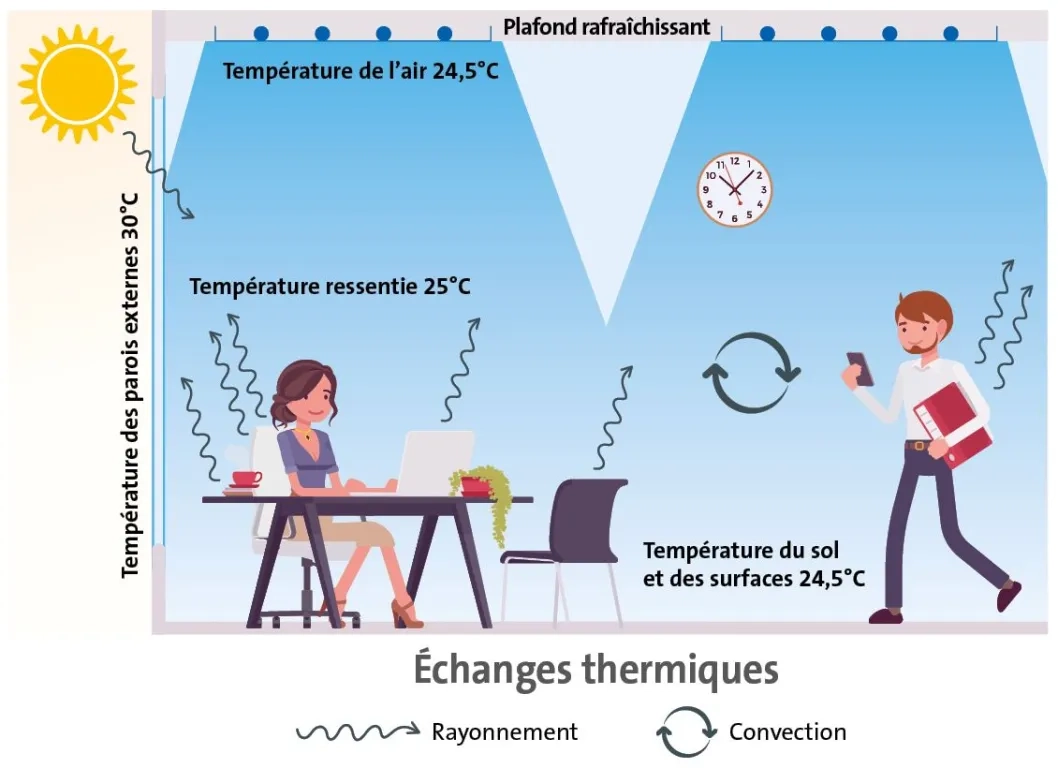

Indeed, unlike traditional technologies, active ceilings provide a uniform temperature and no noise from equipment (heating or air conditioning). More precisely: in winter, when heating, the ceiling emits waves towards the occupants. In summer, it is the opposite, the infrared radiation diffused by people and objects (computers, lights, etc.) is absorbed by the ceilings, which are then refrigerated. These ceilings also avoid the discomfort associated with the air circulation of air conditioning in summer.
An economical and sustainable multi-comfort system
- Opting for this type of thermal installation means choosing discretion and aesthetics because the system, hidden in the ceiling, is invisible but still remains acoustic: no pipes, cables, radiators or other unsightly blowing blocks will disrupt the circulation or the layout of a workspace.
- Ensuring excellent temperature uniformity is one of the major advantages of the reversible radiant ceiling system. Regardless of the temperature of the room, the feeling of heat or freshness is always there since it is not a mass of air that is heated or cooled. No temperature difference in the same place therefore, everything happens by heat exchange between the occupants and the radiant climate ceiling.
- The absence of air mixing and water condensate are the guarantee of limiting the circulation of microbes, thus providing sanitary comfort and thus avoiding the spread of diseases between the occupants of the premises.
- The overall life cycle cost of the system (investment, energy consumption, maintenance) is very attractive. The system operates on temperate water temperature regimes (14°C to 45°C), which is less energy-intensive than conventional heating and air conditioning systems. In addition, the ceiling can work on any water production system (e.g. geothermal).
The heating and cooling ceiling system is therefore beneficial for everyone, both occupants and managers of the premises.
To learn more about the concept and the active Plafometal systems available, discover the dedicated brochure by clicking here.


